A Toronto Maple Leafs campaign that owns the wait since 1967 instead of running from it.
Overview
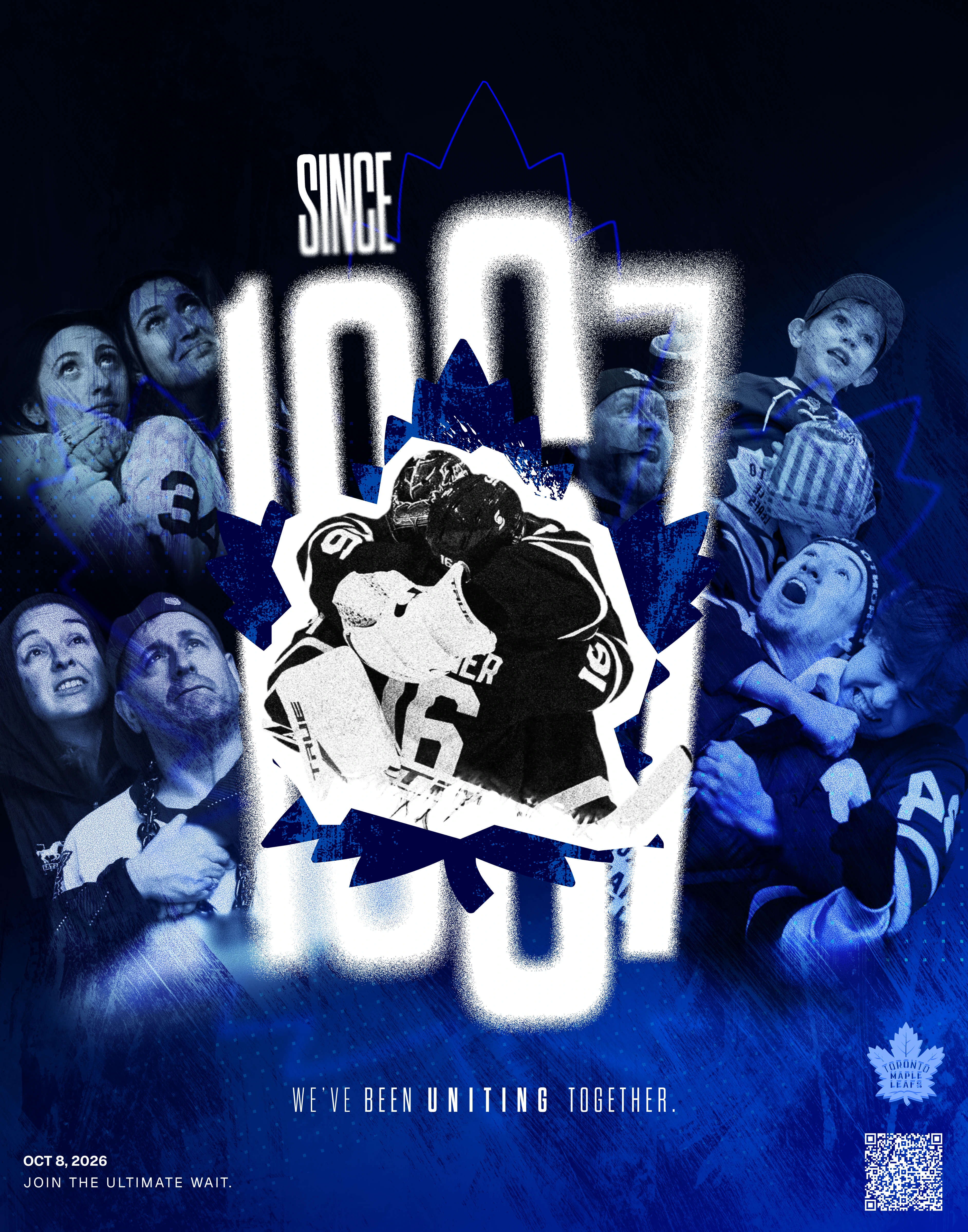
Toronto hasn't won a Stanley Cup since 1967. Leafs fans show up anyway.
Every year, no bandwagon, no asterisk, no apology. The brand never acknowledged that. It kept selling hope, kept saying this is the year, and kept delivering the same exit every spring.
Since '67 does the opposite. The wait is not a failure to explain away. It is the reason every playoff memory hits as hard as it does. The brief was simple: own the drought instead of running from it.
A Custom-Built Interactive Poster Tool
Producing campaign-quality poster variations at speed usually means a full design and development cycle. This tool cuts that entirely.
Built purely in HTML, CSS & JS, it gives the studio a locked design system where typography, color, and layout never move.
The only variable is the photo input. Drop an image in, get a print-ready PNG or PDF out. Every output looks like it belongs to the same campaign because the system doesn't allow anything that doesn't.
This was a small internal production tool-experiment. The point was to see how much a locked system compresses the gap between idea and output.


Wall of Love
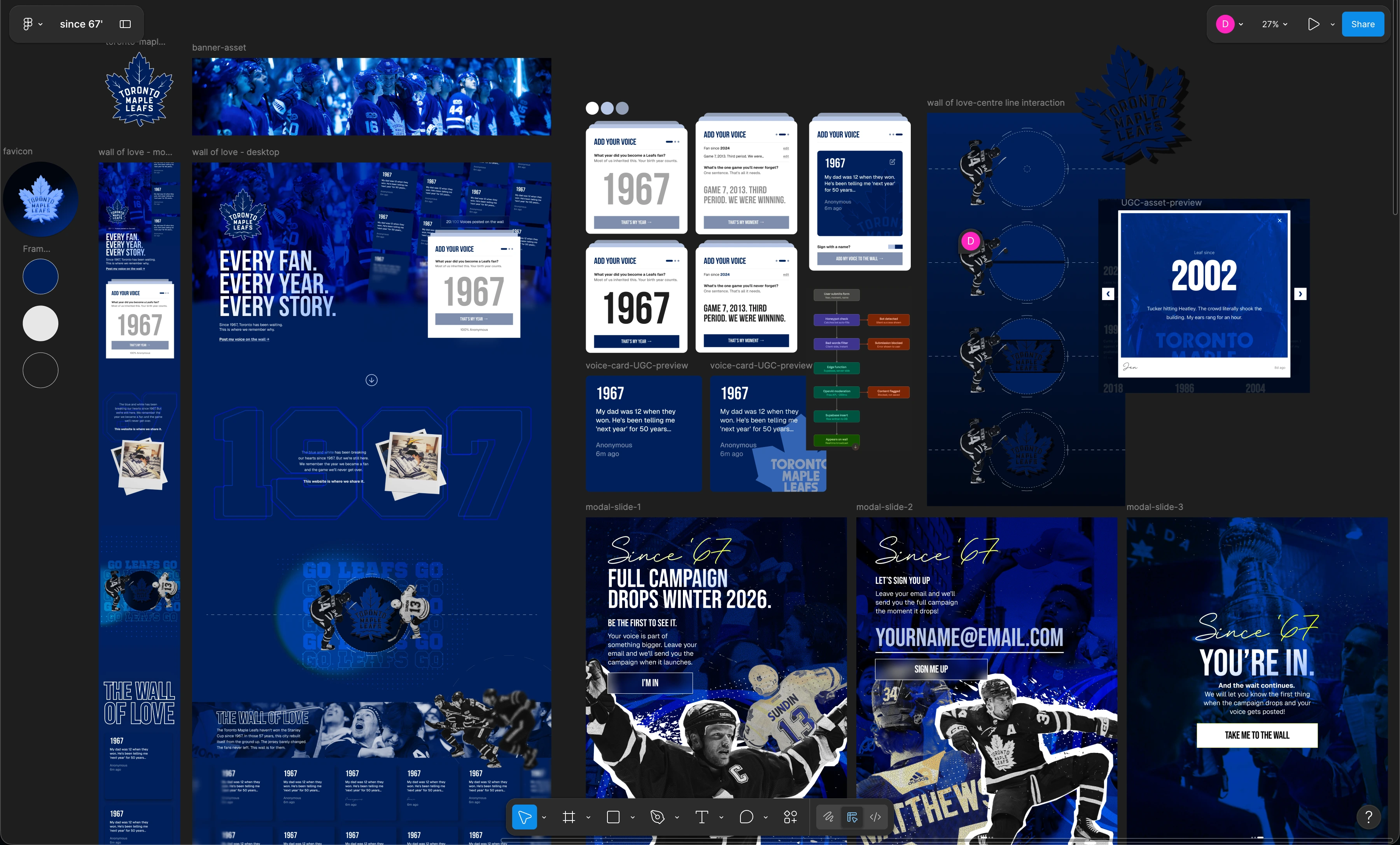
A live User Generated Content (UGC) fan site where submissions replace brand statements.
Fans upload what the Leafs mean to them. Every entry posts to a public wall in real time. If the campaign's claim is that the wait produces meaning, this is the proof — said by the audience, not the brand.
Reflection
What I'd change
I'd lean harder into the participatory layer from the start. The fan wall proves the campaign's claim, but it came late in the process — building that mechanic into the concept earlier would have shaped more of the system around it.
What I learned
The wait isn't something to apologize for — it's the emotional engine. Fans don't need another clean promise; they need something to do with fifty years of hope. Letting them make the history visible turned restraint into participation.